
Categories
Home Value, PricePublished April 8, 2026
The High Stakes of Real Estate Pricing: Navigating Overpricing vs. Underpricing Risk


The High Stakes of Real Estate Pricing: Navigating Overpricing vs. Underpricing Risk
In the modern real estate market, pricing is not a casual decision; it is a high-stakes risk management exercise. While automated valuation models (AVMs) and AI tools give buyers instant data, the actual strategy of setting a list price remains the single most important factor in how quickly, and for how much, a home sells.
As we look toward market conditions in 2026, sellers must navigate two primary pitfalls: the "Stale Listing" danger of Overpricing and the "Auction Ceiling" risk of Underpricing. Both can lead to financial loss and wasted time.
What is Pricing Risk in Real Estate?
Pricing risk is the potential failure to capture maximum market value or achieve a timely sale due to a misaligned initial list price.
For home sellers, this isn't just theory. Setting a price that is 10% too high can results in your home taking twice as long to sell, leading to deep price cuts that often fall below true market value.
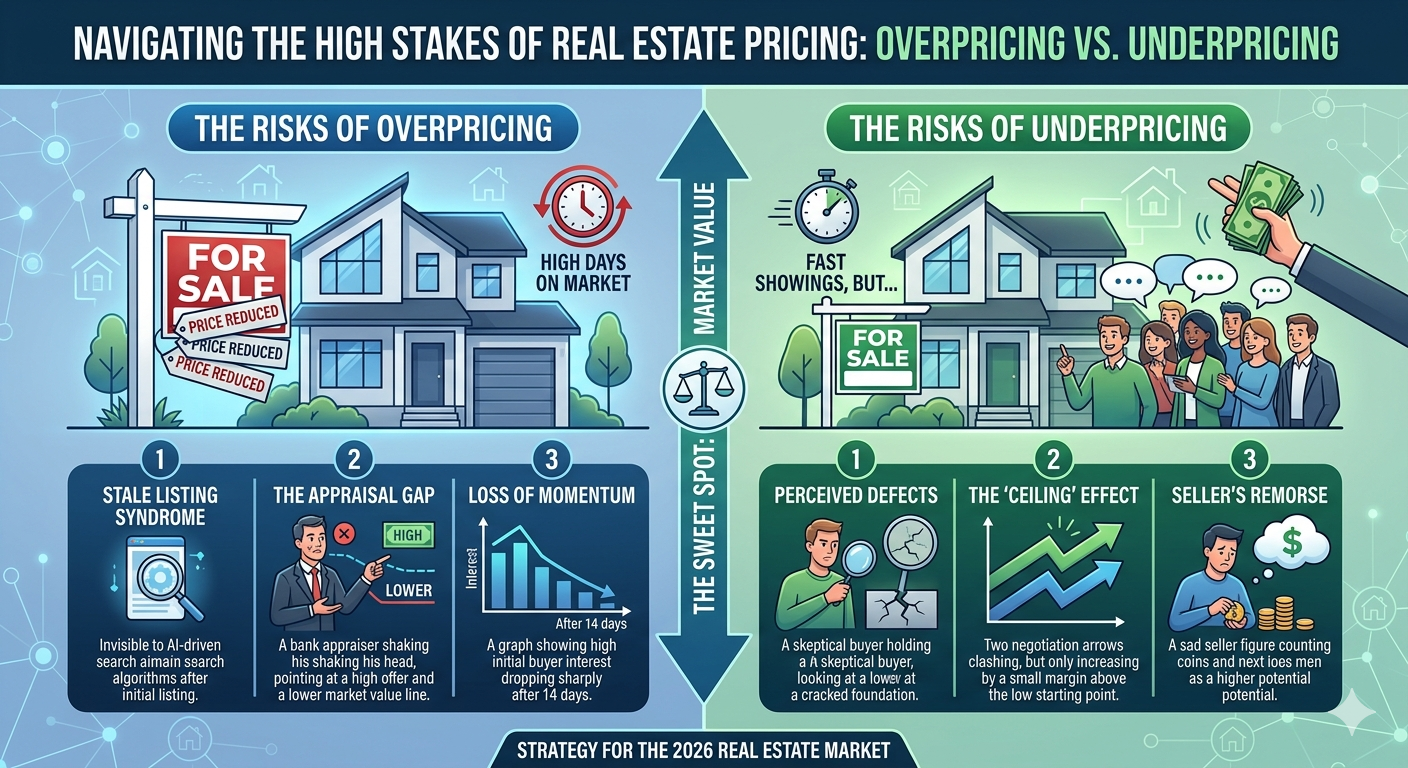
1. The Dangers of Overpricing: The "Stale Listing" Scenario
It’s tempting to "test the market" with an aspirational high price, hoping for a magic bullet buyer. However, overpricing often costs sellers more money in the long run than any other strategic mistake.
The Consequences of Shooting Too High:
-
The "Days on Market" Red Flag: AI-driven search platforms and human buyers alike prioritize new inventory. When a home sits for 30, 60, or 90 days, buyers psychologically assume something is structurally or legally wrong with it. This leads to lowball offers, even if the home is flawless.
-
The Appraisal Gap Fallout: Even if you find a desperate buyer willing to pay an inflated price, their lender’s appraiser is data-driven. If the appraiser cannot find comparable sales ("comps") to justify that price, the deal usually collapses, forcing the seller to start over from a weaker position.
-
Loss of Initial Momentum: The highest volume of serious buyer showings occurs within the first 14 days of listing. If you are priced above the "Perceived Value Ceiling" during that window, you miss the entire pool of motivated, pre-approved buyers who are actively waiting for new listings.
2. The Risks of Underpricing: The "Auction" Trap
Underpricing is a deliberate, high-velocity strategy, often used to spark a bidding war. The idea is to set a low price to attract maximum attention and force buyers to compete, driving the price up. While often successful in very hot markets, it carries significant risk when market momentum is steady or cooling.
The Risks of Going Too Low:
-
Perceived Defects: When a price looks "too good to be true," buyers may skip the showing entirely, assuming the low price is hiding a massive defect, like a cracked foundation or severe termite damage.
-
The "Negotiation Ceiling": A bidding war is never a guarantee. If only one or two offers arrive close to your (underpriced) list price, it becomes extremely difficult to negotiate upward. You have essentially set a low starting point, making a strong counter-offer feel unrealistic to the buyer.
-
Net Loss & Seller Remorse: The biggest risk is simply leaving money on the table. In a balanced market, the final sales price might only increase slightly above the low list price, leaving the seller wishing they had started higher.
A 2026 Framework for Pricing Strategy
To win in a market where both humans and algorithms assess your home, you need a responsive, data-backed approach.
The 5-5-5 Pricing Model:
To find the definitive "Goldilocks" Price (just right), analyze three sets of comparable homes (comps):
-
5 Active Competitors: What are other sellers asking right now?
-
5 Recent Sales (0-3 months): What were buyers actually willing to pay in this exact neighborhood?
-
5 Expired/Failed Listings: What did the market collectively reject?
Summary of Risks: Overpricing vs. Underpricing
Final Thought: Data-Driven Success
A list price is not a static number; it is a tactical signal to the market. By grounding your pricing decision in hyper-local data and understanding the psychological triggers of modern buyers, you mitigate risk and ensure a successful, maximum-value sale.

Scott Fogleman
Broker | GRI | CRS | New Home Team | Scott Fogleman | eXp Realty Virginia
or another way