
Diamond Hill Homes for Sale: Lynchburg's Washington Street Historic District
Diamond Hill sits on a high ridge just south of downtown. For much of Lynchburg's history, it was the city's premier residential address. I lived on Washington Street in Diamond Hill for nearly 10 years. I know this historic neighborhood as both a homeowner and a preservation advocate.
Search Diamond Hill Homes Call 434.941.8847
Diamond Hill at a Glance
- Historic Designation: Listed on the Virginia Landmarks Register and National Register of Historic Places in 1979, and expanded in 1983.
- Size: Approximately 14 blocks and 45 acres.
- Historic Buildings: 143 contributing buildings in the 1983 expansion.
- Main Streets: Washington, Clay, Pearl, Madison, Harrison, Grace, and 13th Streets.
- Building Eras: Homes built from the 1850s through the early 1900s.
- Architectural Styles: Georgian Revival, Colonial Revival, Queen Anne, Greek Revival, Italianate, and Gothic Revival.
- Median Estimated Home Value: About $363,000 (Realtors Property Resource estimate, October 2026).
- Median Home Age: 136 years.
A Short History
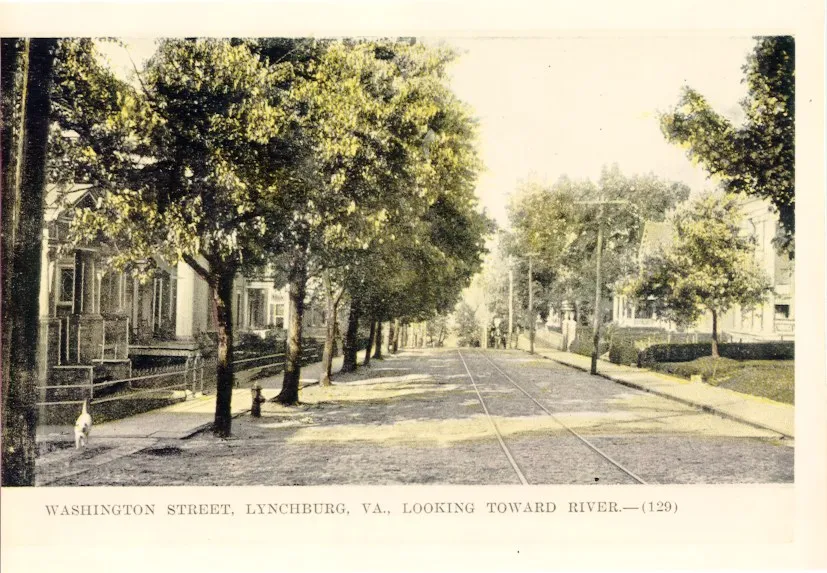
Diamond Hill became a fashionable neighborhood before the Civil War. Early construction included Greek Revival houses, Gothic Revival cottages, and Italianate mansions along Washington Street. The neighborhood remained outside Lynchburg city limits until 1870 due to Horseford Creek and a deep ravine. Following the war, prominent business and civic leaders built homes along Washington, Clay, Pearl, and Madison Streets, making Washington Street a premier address.
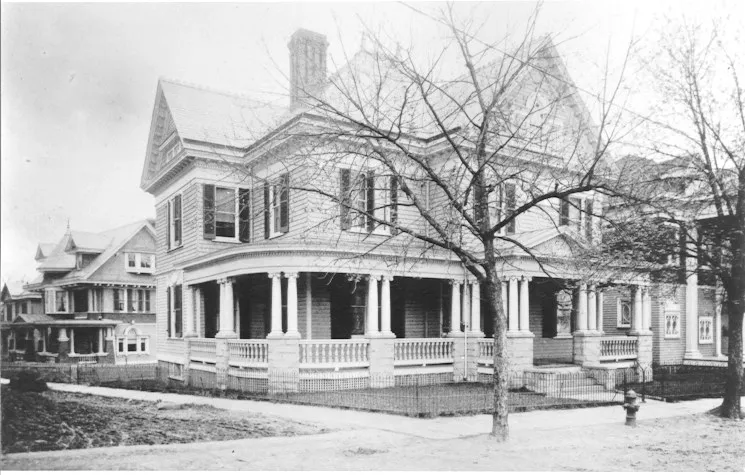
Like many urban neighborhoods, Diamond Hill experienced decline in the mid-20th century, with many mansions divided into apartments. Following historic designation, owners restored a significant portion of its residential properties. Today, the neighborhood features both beautifully restored historic residences and restoration opportunities.
Homes and Architecture
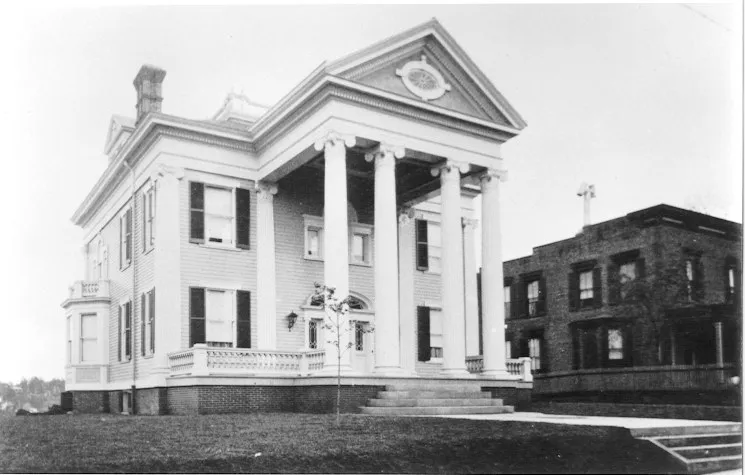
- Washington and Clay Streets: Feature grand historic residences, including many Georgian Revival and Colonial Revival styles. Notable properties include the twin 1906 Georgian Revival homes at 1304 and 1308 Clay Street.
- Queen Anne Style: Highlights include 500 Washington Street (circa 1898) with its prominent portico, and 1314 Clay Street (a Queen Anne home designed by architect J.M.B. Lewis as his personal residence).
- Early Residences: Feature Gothic Revival cottages at 602 Washington Street (circa 1852) and 1418-1420 Harrison Street (circa 1855), alongside Greek Revival and vernacular homes from the 1850s and 1860s.
- Landmarks: Diamond Hill Baptist Church (built in 1937, individually listed on the National Register of Historic Places in 2011, and tied to Lynchburg's civil rights history).
Living in Diamond Hill
Diamond Hill is a short walk or drive from downtown dining, the riverfront, the Lynchburg Community Market, and the Bluffwalk. The neighborhood features steep streets with expansive city views. Residents enjoy an urban setting with historic homes, on-street parking, and a community focused on preservation.
Buying a Home in Diamond Hill
- Know the Rules: As a local historic district, exterior changes (windows, roofing, porches, fences, additions, demolition) require a Certificate of Appropriateness from the City of Lynchburg. Consult the City's Planning Division before starting work.
- National Register Listing: National Register status is honorary and imposes no owner restrictions on its own.
- Home Inspections: Hire an inspector experienced with historic properties to evaluate aging electrical, plumbing, sewer lines, roofs, masonry, and foundations.
- Lead Paint Disclosure: Federal law requires lead-based paint disclosures for homes built before 1978.
- Tax Credits: Qualified historic rehabilitation projects may be eligible for Virginia state tax credits. Verify current guidelines with the Virginia Department of Historic Resources and a qualified tax advisor.
Confirm historic district boundaries and rules for any specific address with the City of Lynchburg.
Selling a Diamond Hill Home
Historic homes sell on their unique character and craftsmanship. I market original architectural details, documented history, and system updates. My pricing strategy evaluates true historic comparable properties in and around Diamond Hill rather than non-comparable newer construction.
Diamond Hill FAQ
Is Diamond Hill a local historic district?
Yes. Diamond Hill is a locally designated historic district in Lynchburg. Exterior modifications require a Certificate of Appropriateness from the City. Interior modifications do not require historic commission approval.
What kinds of homes are in Diamond Hill?
Diamond Hill primarily features large late 19th and early 20th century residences, with the grandest homes along Washington and Clay Streets. The area also includes smaller early cottages. While some historic structures were previously converted into apartments, many have been restored as single-family homes.
More Lynchburg Guides
Lynchburg Historic Districts
- All Lynchburg historic neighborhoods
- Garland Hill
- Federal Hill
- Daniel's Hill
- Court House Hill
- Pierce Street
- Rivermont Avenue
More Lynchburg Neighborhoods
Sources: Virginia Department of Historic Resources, National Register of Historic Places, Lynchburg Museum records and Realtors Property Resource (home value and home age, updated monthly; estimates, not appraisals).
What's My Diamond Hill Home Worth? Call 434.941.8847
Scott Fogleman, Associate Broker | New Home Team | eXp Realty, 800 Corporate Dr, Ste 301, Stafford, VA 22554, (866) 825-7169. Licensed in the Commonwealth of Virginia. Information is deemed reliable but not guaranteed. Equal Housing Opportunity.